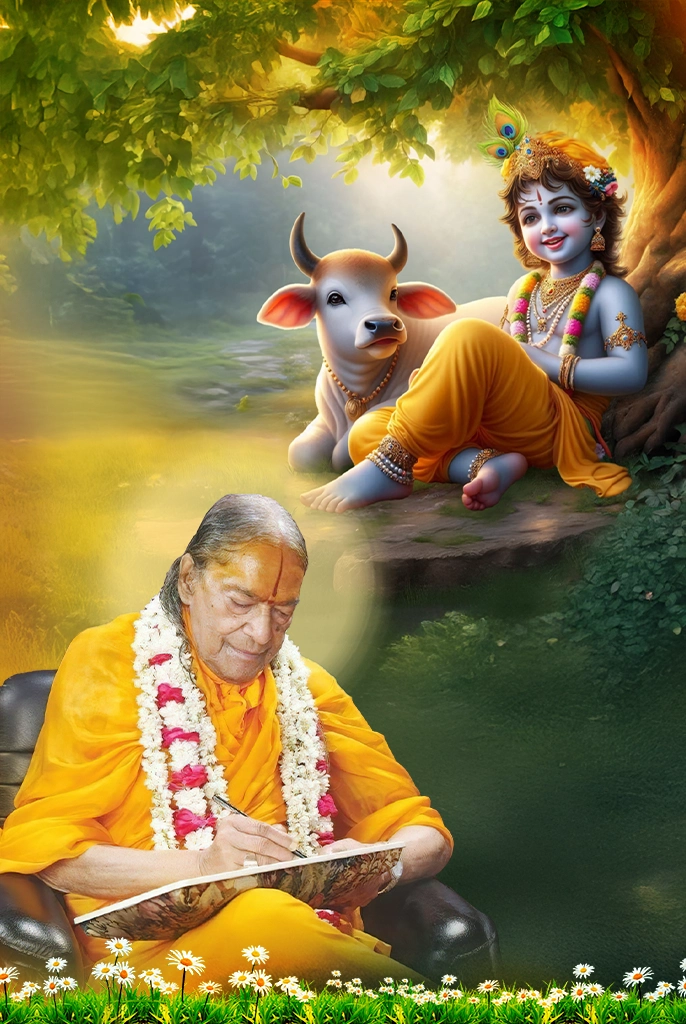


Nothing in this world can be learnt without a teacher. God is not visible to the senses, while the world is directly perceived, yet even the knowledge of a single letter requires guidance. A person may copy the shape of the letter from a book, but he cannot know its name until someone tells him. From childhood to old age, all knowledge is acquired through books, observation and instruction of others.
The scriptures explain the nature of the Guru through the statement ‘guṁ rautīti guruḥ’. The syllable ‘gu’ means darkness or ignorance and ‘ru’ means the one who removes that darkness. The Guru therefore dispels ignorance and reveals knowledge. Even a newborn child does not recognise its mother or father until they repeatedly teach the child who they are. In the same way, every form of learning, whether through parents, teachers or observation, depends on a Guru. Dattātreya accepted even animals and birds as his Gurus, for one may learn valuable lessons from all of creation. A parrot repeats exactly what it hears; similarly, a disciple must faithfully retain and follow the Guru’s words, for using one’s own intellect before them leads to downfall.
If worldly knowledge, which is perceptible to the senses, mind and intellect, cannot be attained without a teacher, then the knowledge of God, who lies beyond the reach of all three, certainly cannot be realised independently. Scientists can understand the material world, but no worldly knowledge can prove God. Only the Vedas reveal Him, and the Vedas themselves can be understood only through a true Guru.
The question, then, is how one finds such a Guru. A student who does not even know the alphabet cannot judge whether a professor is qualified. If he accepts a wrong teacher, his learning becomes defective. The same applies in the spiritual realm.
The scriptures resolve this by teaching that a true Guru is attained through both the grace of God and accumulated merits. Past actions alone cannot give results because they are inert, and grace alone cannot be the only factor, for then everyone would meet a genuine Guru equally. God, who resides in every heart and remembers all deeds across countless births, maintains the account of each soul. When He sees that the soul has earned the appropriate merit, He inspires that person from within and guides them toward a true saint. One feels drawn to visit the saint, listens again, and gradually devotion awakens.
Despite meeting saints in many lifetimes and receiving human life repeatedly, we have not attained knowledge because we do not truly accept the Guru’s teachings. Two obstacles remain.
The first is pride. Outwardly we bow to the Guru, perform rituals and display reverence, but inwardly we believe we know enough. Our education and achievements reinforce the ego, and the heart remains closed to true knowledge.
The second is attachment to the world. Like an alcoholic who knows alcohol will ruin him but cannot give it up, we remain bound to worldly pleasures. Devotion to God and faith in Guru increase as the mind becomes pure. An impure mind progresses gradually through regular Satsang because listening to the divine words of a true Guru naturally develops faith, even if you don’t have it at first. But those who avoid Satsang altogether cannot benefit. The scriptures say that if Brahma himself were to become the Guru of such a person, they could not gain knowledge because their mind is unreceptive.
If one surrendered even slightly in a past life, a natural longing arises in this life to question the purpose of existence. Animals also maintain families and seek pleasure, yet human life holds greater importance. Once the seeker clearly understands the path, a single desire remains: to use whatever time is left in devotion.
For this reason the scriptures emphasise that the intellect should not be applied before the Guru. This surrender to the Guru, known as ‘Guru-sharanagati’, allows divine knowledge to enter the heart. The Bhagavad Gita describes this process by stating that the truth is learnt by approaching a spiritual master with humility, complete surrender, curiosity to learn, and a spirit of service, because such a realised saint has directly seen the Truth. In Bhagwatam, Shri Krishna instructs the disciple to recognise the Guru as His own self and not to apply material intellect in judging him as an ordinary being. The Vedas reinforce this by declaring that one must worship the Guru with the same devotion as one worships God.
Thus, the Guru is the divine guide who removes ignorance, reveals the path to God and leads the soul to its highest welfare. Without the Guru, spiritual knowledge does not arise.
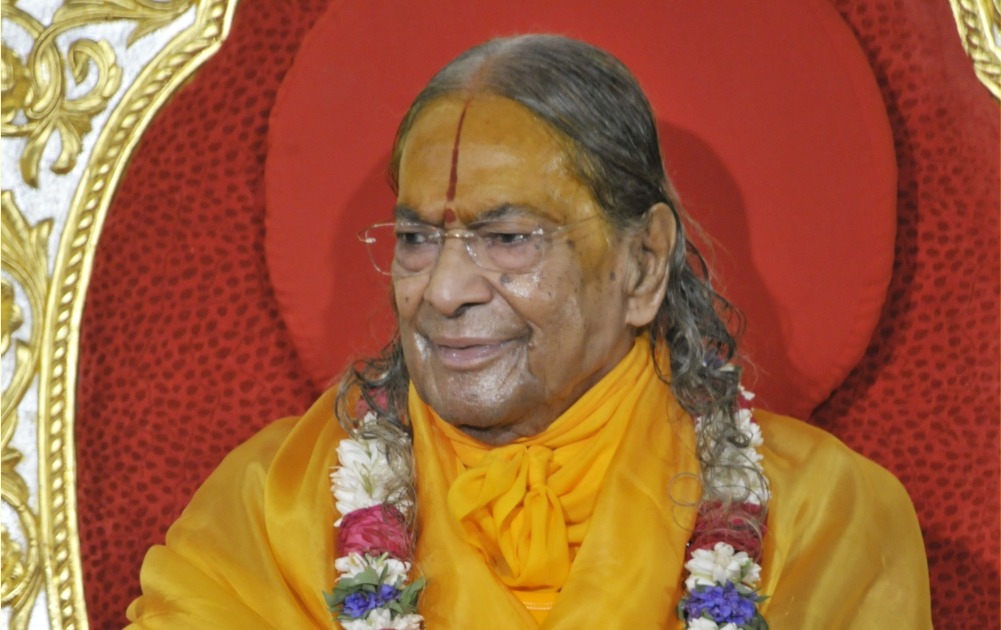
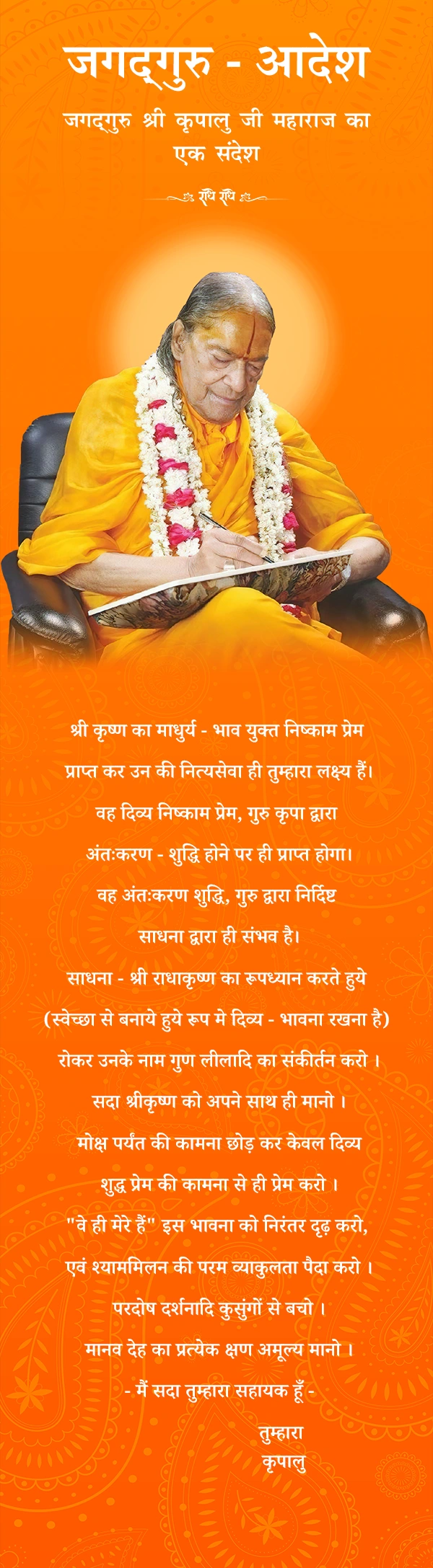
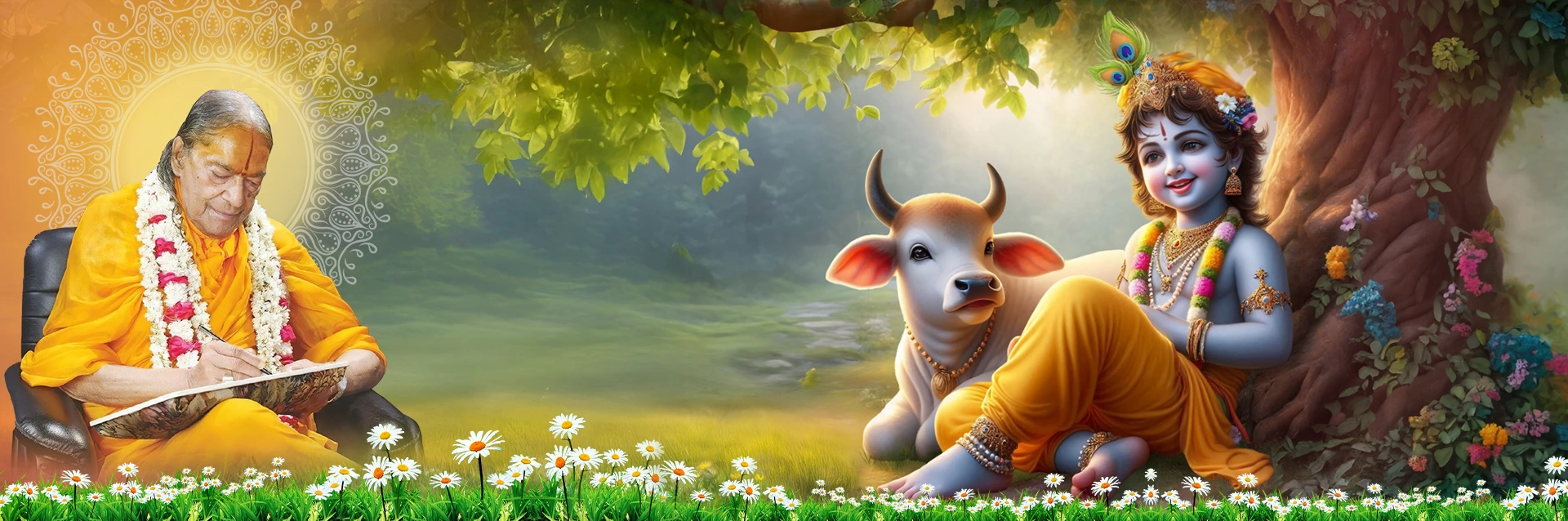
Based on the teachings of Jagadguru Shri Kripalu Ji Maharaj