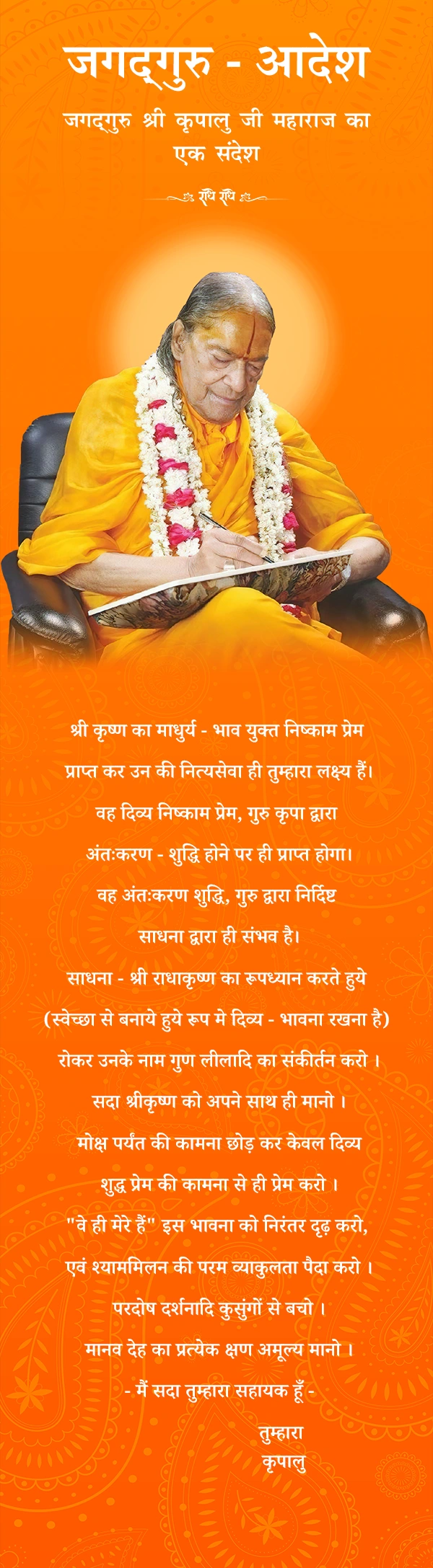

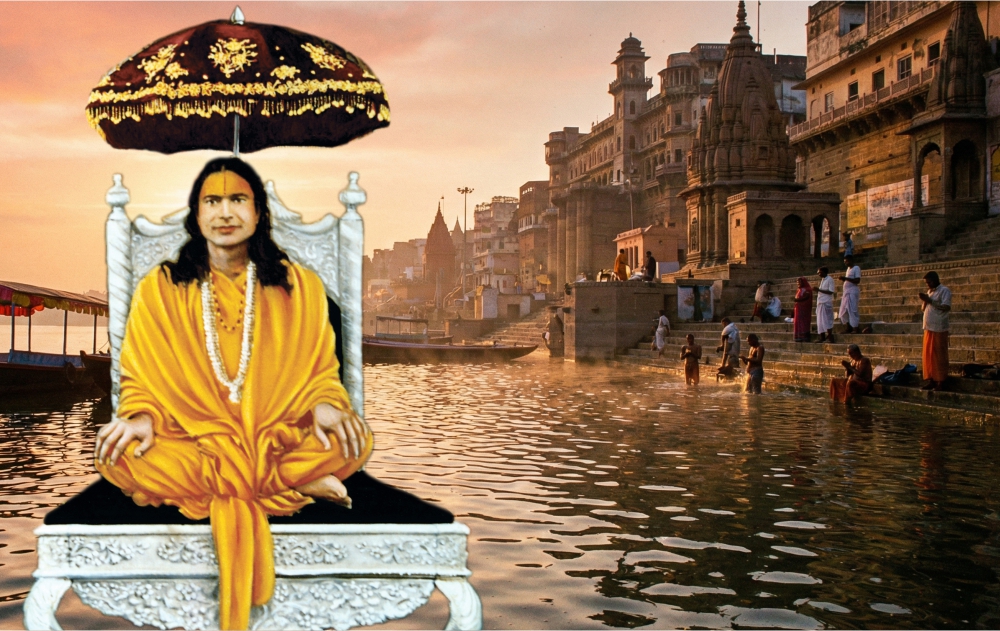
In the vast landscape of Indian spirituality, the word “Guru” is frequently used, often describing anyone who teaches or guides. However, the title Jagadguru—translating to “Supreme Spiritual Guru of the World”—is in a completely different stratosphere. It is not an honorary degree or a popular moniker; it is the highest institutional acknowledgement of divine wisdom in Sanatan Dharma.
To understand the gravity of this title, consider this: in the last 5,000 years of the Kaliyug era, amidst millions of saints, sages, and scholars, only five individuals have been universally recognised as original Jagadgurus.
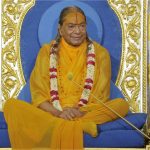
While many great saints are revered as Jagadgurus today due to disciplic succession (inheriting the title from their lineage), the original Jagadgurus are those who established the lineage itself. They did not inherit the title; they earned it. The most recent figure to join this divine group was Jagadguru Shri Kripalu Ji Maharaj, and his journey to this title is a historical phenomenon that defies ordinary human capability.
A Title Earned, Not Inherited
Unlike many spiritual leaders who ascend to positions of authority through established lineages, Shri Kripalu Ji Maharaj stood alone. He had no formal Guru in the worldly sense, nor did he belong to a specific matha (monastery) that handed him the title. His recognition came purely from his own merit.
The Ultimate Test: Facing 500 Reputed Scholars
The year was 1957. The Kashi Vidwat Parishad was not merely a gathering of priests; it was a highly prestigious body comprising 500 of India’s foremost scholars.
These were men aged in their sixties and seventies who had dedicated their entire lives to mastering just one—or at most three to six—specific scriptures such as Vedas, Puranas, Shastras, Upanishads etc. Yet, despite their combined centuries of specialized study, they still harboured unresolved doubts. In stark contrast, Shri Kripalu Ji Maharaj possessed a spiritual authority that far eclipsed the collective knowledge of all 500 scholars combined.
Into this arena stepped Shri Kripalu Ji Maharaj. He was just 34 years old.
For the older, seasoned scholars, a man of this age claiming such wisdom was almost an affront. They did not go easy on him. They “grilled” him relentlessly over ten consecutive days, posing the most complex theological questions and throwing contradicting verses from different scriptures at him to test his depth.
The Miracle of 1957
The discourse began on 5 January 1957. What followed over the next several days left the council stunned.
Shri Kripalu Ji Maharaj, who had never spoken Sanskrit in public before, began addressing them in the divine language. This happened only because a devotee had boastfully promised a skeptic, “He can speak as fluently in Sanskrit as he can in Hindi.” When told of this, Shri Maharaj Ji simply smiled and said, “Now that you have promised them, I will speak in Sanskrit. No problem.”
And speak he did. He began in simple, everyday Sanskrit, which the scholars initially derided as low-standard. But the atmosphere quickly shifted. He escalated his language to chaste Sanskrit, then to a terse style using complex compound words, and finally to Vedic Sanskrit so difficult that the scholars had to strain every nerve to understand it, leaving some completely baffled.
The Investigation: Disbelief and Verification
The display of knowledge was so overwhelming that skepticism arose—not about his wisdom, but about his history. The scholars could not fathom how a 34-year-old could possess such mastery without decades of study.
To resolve their doubts, representatives from the council travelled to his home in Mangarh (now known as Shri Kripalu Dham) to interview his mother, Shrimati Bhagwati Devi. They confirmed his birth date and uncovered a stunning truth: he never had a Guru, nor had anyone ever seen him study the scriptures. His knowledge was not learned; it was innate.
Why was his contribution considered so supreme? It was his unparalleled versatility and ability to harmonize.
On one of those days in Kashi, he spoke at three different venues: the Kashi Vidwat Parishad, Sanskrit College, and Banaras Hindu University. Scholars noted that his style shifted so drastically for each audience—providing rigorous proofs for the pundits, detailed explanations for the students, and illustrative stories for the common people—that if you listened with your eyes closed, you would swear it was three different speakers.
The Great Reconciliation
What truly won over the 500 scholars, however, was his ability to reconcile.
For centuries, Indian philosophy appeared divided. The previous four Original Jagadgurus had established distinct schools of thought, often debating whether God was formless (Advaita) or possessed a form (Dvaita).
Shri Kripalu Ji Maharaj harmonised these seemingly contradictory views. He demonstrated that the differing philosophies were not opposing truths, but rather distinct stages on the same path.
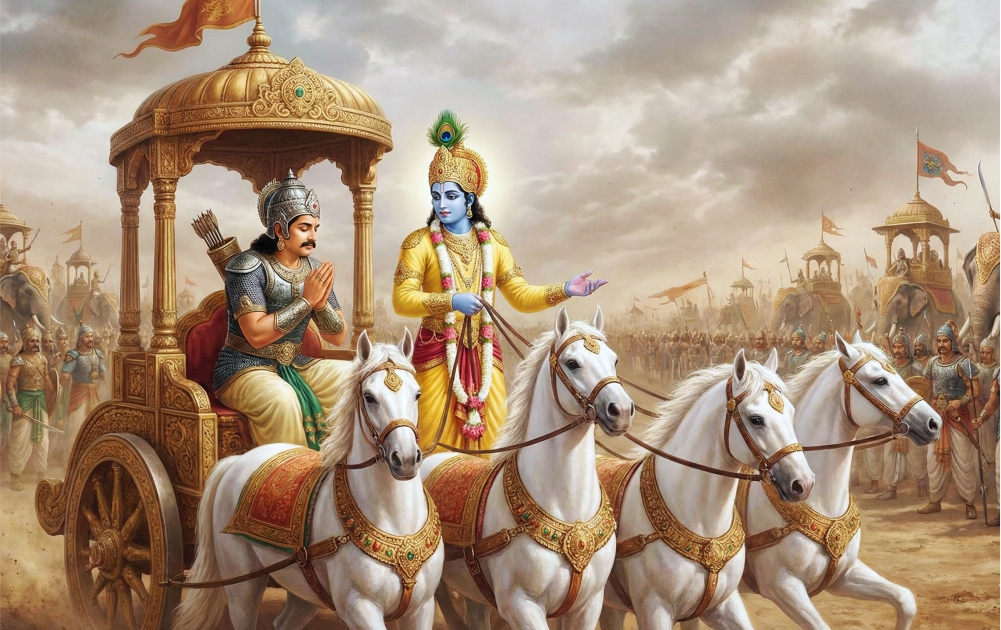
He clarified the ultimate conclusion of the Vedas: While God can also be formless, the worship of the personal form of God—specifically through Bhakti—is the highest path in Kaliyug.
He proved that the rigour of the Vedas and the sweetness of the Puranas are one and the same. By reconciling the wisdom of all previous Jagadgurus, he ended the age-old philosophical contradictions.
A Timeless Legacy
Stunned by his irrefutable logic and divine authority, the Kashi Vidwat Parishad unanimously honoured him with the title of Jagadguru on 14 January 1957.
Recognising that his reconciliation of all philosophies was unique in history, they did not stop there. They bestowed upon him an unprecedented accolade: Jagadguruttam—the “Supreme among all Jagadgurus.”
Jagadguru Shri Kripalu Ji Maharaj left the physical world in 2013, but his legacy endures in monuments like Prem Mandir and the simple, accessible practice of Roopdhyan meditation he taught. By earning the title of Jagadguru at the impossible age of 34, he proved that divine wisdom is timeless—reconciling the wisdom of the past to give us a clear path for the future.
To commemorate this unparalleled triumph of divine wisdom, devotees across the globe observe 14 January as Jagadguruttam Diwas each year, honouring this historic milestone with profound reverence and spiritual fervour.