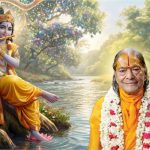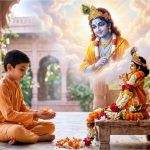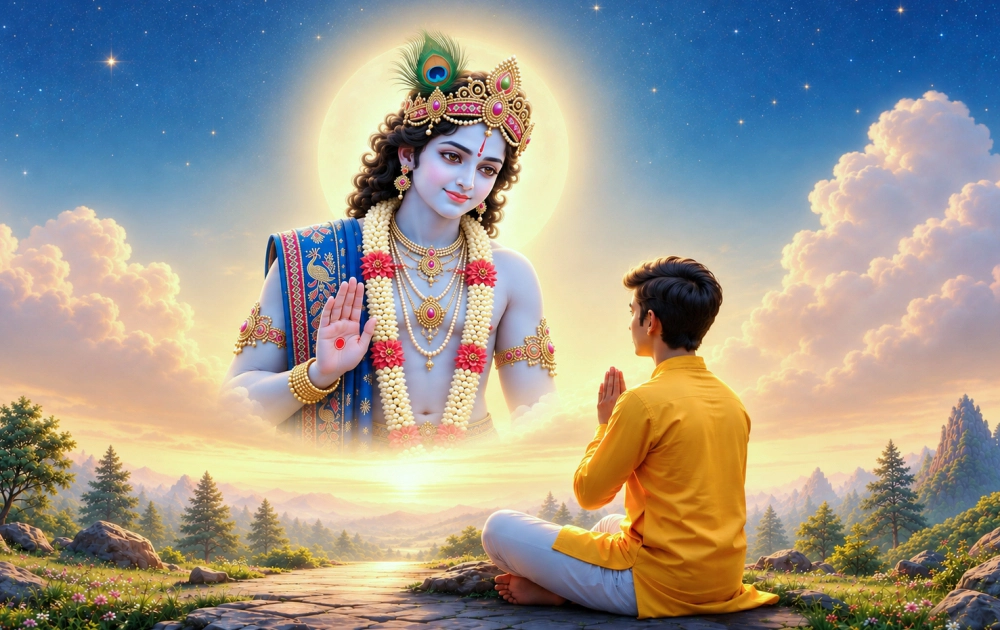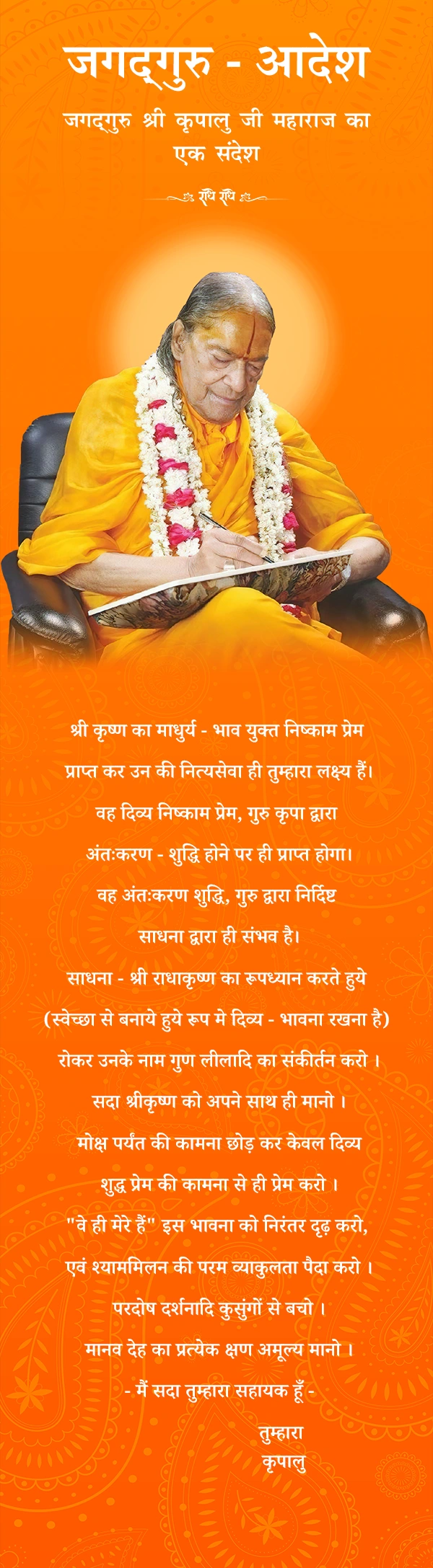

Jagadguru Shri Kripalu Ji Maharaj, in his unparalleled literary work Prem Ras Madira, composed 1008 pads (devotional poems) that carry the deepest spiritual truths in the language of the heart. In the following devotional composition, he expresses the feelings of a devotee as a child asking for the causeless compassion of His eternal mother. It is not merely a kirtan to be sung. It is a prayer, and an act of complete surrender, all woven into seven powerful luminous lines.
अपनी ओर टुक हेरो री, किशोरी राधे।
हौं तो कुटिल नीच सब दिन को, विश्व विदित अघ मेरो री किशोरी राधे!
पै ‘बिनु हेतु पतितपावनि’ यह, विरद दुर्यो कित तेरो री किशोरी राधे!
शिशु नवजात न जानत मातहिँ, रहत मातु रुचि चेरो री किशोरी राधे!
त्यों हौं अति अबोध जड़ पामर, महामोह तम घेरो री किशोरी राधे!
हमरिहिं बेर बेर कत एतिक, याको करिय निबेरो री किशोरी राधे!
जगहुँ सुनात ‘कृपालु’ कुमात न, यदपि कुपूत घनेरो री किशोरी राधे!
“Please look towards Yourself, O Kishori Radhe!”
In the very first line the devotee approaches the Divine Mother, Shri Radha Rani, the embodiment of divine love and instead of asking Her to look at him, he asks Her to look at Herself.
Why?
Because he knows that if Radha Rani were to look at him with the searching eye of examination, his unworthiness would be all too apparent. And so, with remarkable wisdom born of humility, he appeals “Do not look at me and find a reason to turn away. Look at Yourself and find reason to embrace me.”
This is the foundation of ‘sharanagati’ (surrender) as taught by Jagadguru Shri Kripalu Ji Maharaj. True refuge is not taken on the basis of our merit, but on the basis of the Lord’s boundless grace. The devotee here demonstrates exactly this: approaching the Divine not with a list of qualifications, but with an honest acknowledgment of his own unworthiness and an appeal to Her inherent nature as the ‘Patit Pavani’, the purifier of the fallen.
“I have been crooked and lowly since time immemorial and my sins are known to the entire world.”
Here, Jagadguru Shri Kripalu Ji Maharaj places the full weight of our condition before us. This is not poetic exaggeration. According to the scriptural teachings of Kripalu Ji Maharaj every soul that has remained in the cycle of birth and death bound by maya has accumulated countless lifetimes of spiritual ignorance, self-centeredness, and forgetfulness of God.
And yet the devotee does not despair. This is the turning point of the entire composition.
“But what of Your vow, ‘I purify even the greatest of the fallen, without any cause or reason? Where has that promise gone?”
The devotee, having confessed his utter wretchedness, now turns the appeal not to his own goodness, but to Her pledge. Radha Rani’s eternal vow and reputation is that She uplifts the fallen without requiring any reason, any qualification, or any prior virtue. She does so simply because it is Her nature, because compassion is not an act She performs but the very essence of who She is.
Jagadguru Shri Kripalu Ji Maharaj, always emphasised that Radha Rani does not love us because we are good. Radha Rani loves us because She is the embodiment of love, and She can do nothing except bestowing grace. Radha Rani does not wait for a soul to become worthy before extending grace; Her grace itself is what creates worthiness.
The devotee’s appeal here is profoundly intelligent: “You have made this vow. I am the most fallen. Therefore, I am the most perfect candidate for Your grace. Will You go back on Your own word?”
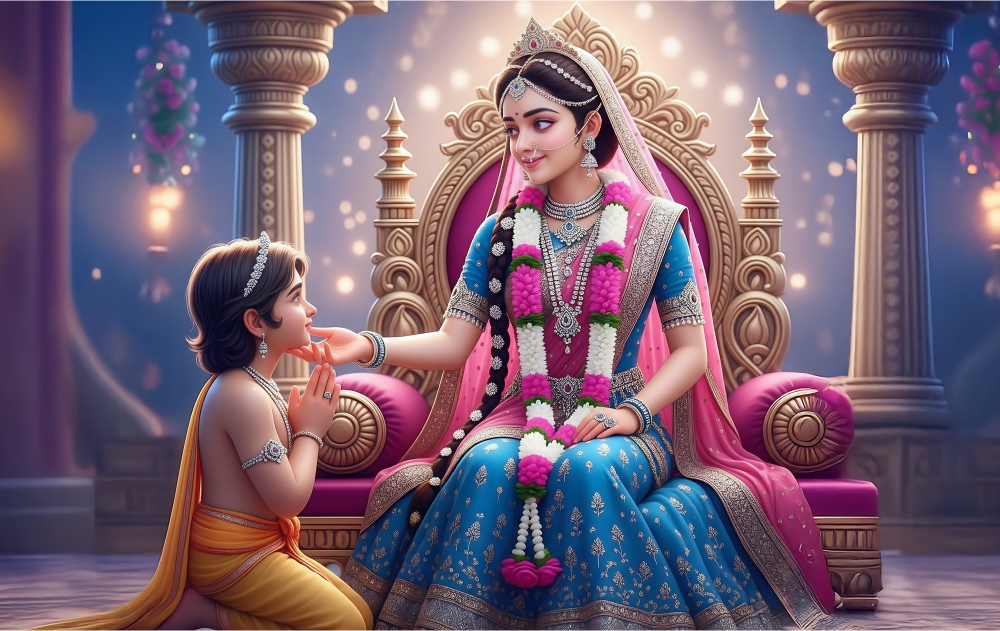
“A newborn child does not even recognise its mother, yet the mother instinctively fulfils all its needs.”
This verse carries one of the most beautiful and tender teachings in the entire pad. Jagadguru Shri Kripalu Ji Maharaj uses the tender image of a newborn to show the depth of Radha Rani’s compassion. Just as a mother instinctively cares for her child who cannot speak, recognise her, or express its needs, Radha Rani showers grace on souls who are helpless, ignorant, and unable to call upon Her with refinement. The mother’s love requires no reciprocation, and in the same way, Radha Rani’s grace flows not because of our worthiness but because of Her nature as Divine Mother.
Kripalu Ji Maharaj taught that the highest qualification for receiving Radha Rani’s grace is acknowledging our own helplessness before Her. In that simple recognition, “I am nothing without You”, the soul becomes the perfect recipient of Her boundless love.
“In the same way, I too am utterly foolish, inert, and wretched, surrounded on all sides by the terrible darkness of great delusion.”
The devotee says he is surrounded by the darkness of profound delusion on all sides. There is no partial escape claimed here, no spiritual credentials offered. There is only a soul, hemmed in by maya, turning to the one light it dimly senses: Radha Rani.
This is the true condition of each one of us. And it is precisely for souls in this condition that Radha Rani’s compassion shines brightest.
“You have never made any fallen soul wait this long. Why, then, this delay for us? Please consider this.”
The devotee has been kept waiting too long. Not with anger, not with demand, but he asks with the innocent insistence of one who knows they are loved and cannot understand why the embrace is delayed. He reminds Radha Rani of Her own record; She has never made a fallen soul wait indefinitely. Her grace has always come. Jagadguru Kripalu Ji Maharaj taught that this kind of prayer is not presumptuous. It is the prayer of longing. When the soul cries out in longing, it is not questioning the Divine; it is calling out to the Divine with all the urgency of union. This is a cry the Divine cannot remain unmoved by forever.
Jagadguru Kripalu ji says “Nowhere in this world has a bad mother ever been found, no matter how many bad sons there may be.”
This final verse is the jewel of the entire composition. Jagadguru Shri Kripalu Ji Maharaj seals the prayer with a simple, irrefutable truth drawn from the universal experience of humanity: there are countless ‘kuputra’, wayward, ungrateful, errant sons, but ‘kumata’, a bad mother? Nowhere. In all of creation, no true mother has ever been found who abandoned her child on the basis of the child’s failings.
If this is the nature of wordly motherhood, what then of our eternal mother, Radha Rani, who is the very source of all divine love, all grace, and all tenderness in existence? If wordly mothers, imperfect as they are, do not abandon their most difficult children, can the Divine Mother abandon Hers?
The answer is self-evident. And it is in the glow of this certainty that the devotee rests, eyes wet with tears, no argument left to make, only this one truth: “I am Her child. That is enough.”
Source: Prem Ras Madira, 4.2 (Dainya Madhuri)
Composed by Jagadguru Shri Kripalu Ji Maharaj